If you would not want to be forgotten as soon as you are dead, either write things worth reading or do things worth writing --> Benjamin Franklin
This blog is best viewed with Mozilla Firefox and Google Chrome
Thursday, 17 May 2012
Haru bang at Akasaki Port

Tuesday, 28 September 2010
Jalan2 di World's Best Airport : Incheon International Airport, South Korea
- In 1998, received ISO certifications in airport construction and airport services.
- From 2002, won for three consecutive years, the Best Airport Award according to IATA and ACI.
- In 2002, was rated second in the Best Airport Worldwide category according to IATA and ACI.
- Incheon International Airport Corporation became the first in the world to receive ISO certification in airport services.
- In 2005, won the Best Airport Worldwide 2005 award from AETRA Service Monitoring which was jointly conducted by IATA and ACI.
- In 2006, received the ATRS' Top Asia-Pacific Efficiency Award after achieving a residual variable factor productivity efficiency value that was 57% higher than the average of those in the region.
- In 2006, was awarded as the world's best airport based on a passenger survey conducted by the IATA.
- Was named Best Airport Worldwide at the first Airport Service Quality Awards
- Received an ISO certification in the environmental category.
- Was awarded the "Best in Service Award in Class" at the 1st International Conference on Airport Quality and Service by the IATA and the ACI.
- The airport ranked second in "Best Airport Worldwide", behind Hong Kong International Airport, and tied with Singapore Changi Airport.
- Won the GT Tested Award for Best Airport in the World in January 2007.
- Named by Global Traveler (GT) as the Best Airport in the World for the second straight year in January 2008.
- Has been named World's Best Airport for 2009, in the World Airport Survey results published by Skytrax.
- In 2010 it was ranked the second-best airport in the world by Skytrax, behind Singapore Changi Airport, based on a customer satisfaction survey.
*source: Wikipedia*
Sikit punya banyak dah award yang di sapu bersih oleh Incheon International Airport bermula dari pembukaan rasmi airport ini pada 2001 hinggalah sekarang 2010. Incheon International Airport menggantikan Gimpo International Airport yang sekarang cuma handle domestic flight sahaja.
Pendapat peribadi I pulak setelah 2x menggunakan airport ini ialah I memang sangat seronok sepanjang berada di Incheon International Airport. Basic facilities kat airport ni almost sama lah dengan International airport lain.
These are the things yang buatkan I rasa Incheon International Airport ni best ialah kerana :-
1) Museum of Korean Culture
Traditional Cultural Experience booth ada beberapa location kat dalam airport ni. Salah satunya kat Concourse 4F. Macam2 info pasal budaya dan adat negara Korea ada kat situ. Yang bestnya ialah, ada jugak pertunjukan dan segment istimewa untuk pengunjung2 di situ bagi lebih mengenali budaya masyarakat Korea.
Masa kami transit hari tu, siap ada perarakan ala2 raja melawat rakyat di zaman silam. Memang real diorang wat lakonan semula tu, siap dengan segala pengawal dan isteri sekali.
2) KIDS ZONE
I rasa nama KIDS ZONE tu patut di tukar ke KIDS & PARENTS ZONE sebab seriously, I had so much fun stay there...ehehe. Memang best sangat children playground kat KIDS ZONE tu sampai I pun join
3) FREE PHOTO ZONE
Kalau bertuah, kadang2 Pororo akan datang berkunjung kat airport ni untuk mengadakan sesi fotografi percuma dengan pengunjung2 airport ni. Pororo ni ialah karaketr dari kartun penguin chomeyl yang terkenal di Korea.
4) NURSING ROOM
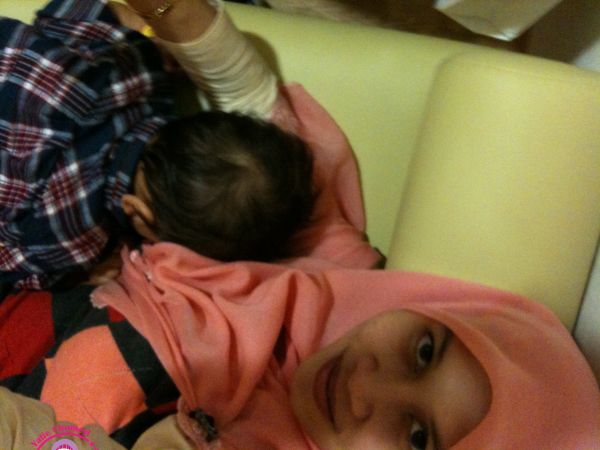
Sebelah je dengan Kids Zone tu ialah nursing room yang sangat luas siap ada kerusi sofa panjang. Sempatlah jugak I baring tergolek2 kat atas sofa tu sambil menyusukan baby SN. Siap tertidur lah jugak sebab syok sangat dapat baring2 atas sofa empuk tu.
5) WI-FI & FREE INTERNET AREA
Bukan semua international airport offers free internet and free wi-fi kan?. Few years ago masa I transit kat Heathrow Airport pun, internet kena bayar baru leh guna..but sekarang I tak sure la..mungkin dah free.
Yang best kat IIA ni ialah dah la ada free wi-fi untuk yang ada laptop sendiri, pastu banyak booth yang sediakan komputer dan internet for free kat Concourse 4F. Pastu kat cafe2 dan lounge pun ad di sediakan laptop dan internet for free. Pendek kata kalau kena transit berjam2 pon, boleh update blog tanpa segan silu hehehe.
=- online YM sambil makan udon -=
=- free laptop + internet @ cafe -=
=- desktop + internet + webcam -=
6) REST AND SLEEP ZONE
Kalau rasa tak nak bazirkan duit tidur kat Transit Hotel, ada banyak bench dan sofa yang empuk2 di sediakan untuk passengers yang transit dn perlu bermalam untuk menunggu next flight. Kerusi tidur tu siap ada bentuk body contour lagi, memang tidur berdengkur2 tak hengat lah bila baring atas kerusi tu hehe.
Amacam, best tak IIA ni?. No wonder IIA ni dapat award World's Best Airport untuk beberapa tahun berturut2 kan?. Plus, kedai2 duty free banyak yang best2. Sebab asyik masyuk duk keluar masuk kedai2 kat airport tu, so I tak ambillah gambar2 kedai *window shopping jer lah pun* eheheh. So, next time kalau ada peluang..jangan lupa ambik transit flight kat Incheon International Airport ni ye ;)

Thursday, 12 August 2010
Traveling in Seoul for 5-6hours
As for this time, we opt a guided tour service offered at the Incheon International Airport (IIA). We decided to join the travel tour which cost $50 per adult which also include lunch meal. Though we realize the fact that a group guided tour means that less independence for our time and activity, but we have also need to consider baby SN's condition at that time. After the 6 hours flight from KL-Seoul, baby SN is not feeling well + sleepy + tired so I guess we have made the right decision.
This English guided tour lead by Jane as the tourist guide were also joined by a newly wed couple from US + 2 families from Philippine and China + 3 other people. During that 5 hours trip we were given the chance to went to 3 famous tourist spots in Seoul.
(1) Gyeongbokgung Palace
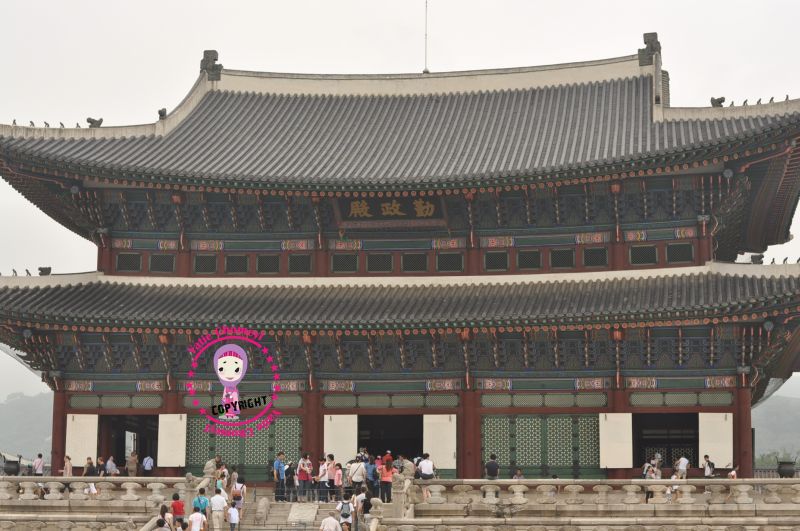
This is the first place for the tour which is about 1 hour journey with car from the IIA. Gyeongbokgung Palace is a royal palace located in northern Seoul. The name of the palace, Gyeongbokgung, if translated in English mean "Palace Greatly Blessed by Heaven."
The premises were destroyed by fire at the time of the Japan's occupation of Korea during 1592-1598. However, all of the palace's 7,700 rooms were later restored under the leadership of Heungseondaewongun in the years of King Gojong (1852~1919) .
=- inside view of the palace -=
There were Five Grand Palaces built by the Josen Dynasty. It is advised by the travel guide to spend 3 hours around the Royal Palace.
=- guard changing ceremony -=
The main palace building Geunjeongjeon is an ornate two-storey building. Gyeonghoeru, a large raised pavillion resting on 48 stone pillars, is the second one. This building is located on the left of the main building. On the right is the large living quarters for the primary queen which is called Gyotaejeon. On the eastern side the quarters for the crown prince Jaseondang is located. *sila tak perlu kagum camne I leh ingat nama2 panjang dlm bhs korea melainkan info di cilok dari sini,
I tak dengar sangat pun masa Jane explain hoho*
To be honest, hubby and I feel excited to see the palace only for the first 30 minutes. Lepas tu dah agak bosan sebab bagi kitorang lebih kurang je design untuk setiap palace tu. Plus, baby SN is being cranky and grumpy due to the hot weather and lapar.
(2) National Folk Museum
Located inside Gyeongbok Palace, the National Folk Museum comprises three interconnected buildings. Inside the museum are examples of the different periods of Korean history, from pre-history through the Japanese occupation.
The National Folk Museum of Korea is the only national museum devoted to the history of traditional life, and most of the collection is closely related to the daily routines and occupations of pre-modern Koreans.
The diverse range of items includes wooden kimchi containers collected during a folk survey of Gangwon Province mountain communities, the skirts and jackets worn by newlywed brides, Joseon-era ornaments unearthed from graves, farming implements, and records of real estate transactions and many many more. *yea, sekali lagi info di cilok dari sini, mak tak kuasa nak hafal apa yang Jane dok pot pet explain
(a) Exhibition Hall 1 displays the representative materials of everyday life and customs in Korea from prehistoric to modern times.
(b) Exhibition Hall 2 illustrates how Korean life of the Joseon period (1392-1910) revolved around the cycles of nature central to an agricultural society.
(c) Exhibition Hall 3 traces the major events in the life of a Korean born into the upper class of Joseon (1392-1910) society.
(d) The Donation Hall was established to honor those who have donated family heirlooms permanently to the museum. In so doing, they are sharing personal property with the public and making it available for research
(e) The Open-air Exhibition on the grounds of the National Folk Museum of Korea offers many items that remind the Korean viewer of traditional rural life. You can also see the stone piles and carved wooden birds atop long poles that were objects of village worship. Also of interest are the stone guardians of the twelve directions, with their humanoid bodies and animal faces.
(3) Insa-dong
The next destination for our tour is to the street of Insa-dong which is a narrow street lined with antique stores, art galleries and secondhand bookstores. This street is the most reliable place in the city to purchase antiques and reproductions, especially on the different types of Choson Dynasty chests. Traditional teahouses and art galleries are also concentrated in this area. *info
Since it was Sunday, the main street is blocked to vehicular traffic, allowing the throngs of people to mingle without fear of being run down by Seoul drivers taking a shortcut. It was raining cat and dog
We were given only 20 minutes to walk down the street,so tak cukup masa lah untuk shoping apa sangat. In the end, we just bought a Korean traditional sweets i.e Korean court cakes: KkulTare. Kkultarae are made with honey. Thick, firm honey is stretched and pulled into strands, dipped heavily in cornstarch to keep the strands from sticking together, then wrapped around a filling of ground nuts. The finished product is made with 16,000 strands of very fine honey!
=- tengok muka hubby yang bersunguh makan KkulTare yang sungguh2 lazat -=
The tour ended at a Korean restaurant where all of us were given the chance to taste Korean meal. It is more or less similar to Japanese food, with an addition of kimchi + seaweed on top of the rice. The rice is put in a claypot bowl and served together with miso soup. The taste is OK..not so bad yet not so delicious..biasa2 jer lah kan, nak expect apa sangat makan nasi dengan sayur je pon hehe.
Okeh, ni I nak buat promosi sikit. Sambil2 I tulis entry ni, ada keluar promosi dari AirAsia kat Nuffnang ads I. So, cekidaut *click the image* for those of you who was thinking of going to Seoul (*sebab-terus-rasa-teruja-lepas-baca-entry-ini*) at cheaper and affordable flight ticket price.
Psssstttt : banyak lagi gambar2 kat Korea untuk di share, kalau rajin I buat lagi satu entry..kalau malas, takde la jawabnya